


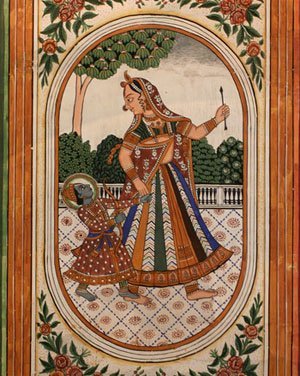
 Shekhawati wall paintings are an enchanting form of mural art that flourished primarily in the Shekhawati region of Rajasthan, India. This area, known as the “open art gallery of Rajasthan,” encompasses districts like Jhunjhunu, Sikar, and parts of Churu. The paintings date back to the 18th century and continued to be popular until the early 20th century. They adorn the havelis (grand mansions), temples, and even cenotaphs of the region, depicting a wide range of subjects from Hindu mythology to scenes from the daily lives of the people and the arrival of the British, which influenced some of the themes and styles.
The paintings depict various subjects, including images of gods, goddesses, and scenes from Hindu epics like the Ramayana and Mahabharata. Additionally, they portray the social and economic activities of the time, such as trading, festivities, and processions.
With the arrival of the British and other Europeans, iconography began to include trains, cars, balloons, telephones, and other modern inventions, reflecting the changing times and the influence of Western culture.