


Bengali theatre has its roots in traditional folk performances and religious plays. The modern form of Bengali theatre began to evolve during the British Raj, particularly with the establishment of the Hindu Theatre in 1831 by Prasanna Kumar Tagore, marking the first step towards a structured theatrical movement in Bengal. The first play staged was a Bengali adaptation of a European drama, which opened up new stylistic and thematic possibilities.
 The late 19th and early 20th centuries are often considered the golden age of Bengali theatre, with Kolkata as the epicentre. This period was characterised by the works of notable playwrights such as Girish Chandra Ghosh, regarded as one of the fathers of modern Bengali theatre. Ghosh’s plays often mixed melodrama with social and mythological themes, making theatre a form of entertainment and a medium for social education.
With the founding of the Indian People’s Theatre Association (IPTA), the theatre became even closer to the people by focusing on contemporary political and social issues of concern to them. This period saw the creation of plays that dealt directly with contemporary social problems and were aimed at stirring the conscience of the viewers. The works of Bijon Bhattacharya, such as “Nabanna” (New Harvest), depicted the Bengal famine of 1943 and exemplify this phase.
In the post-independence era, Bengali theatre continued to evolve with new writers and directors emerging on the scene. Figures like Utpal Dutt stood out with his politically charged plays, such as “Kallol,” which challenged societal norms and inspired public discourse about democracy and individual rights. Dutt’s theatre was marked by its bold political statements and innovative use of public spaces and street theatre.
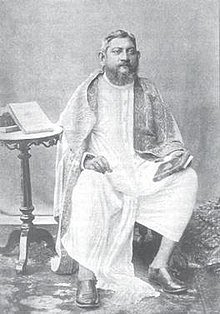
Girish Chandra Ghosh
Contemporary Bengali theatre combines modernist and post-modernist trends with experimental forms and themes. Directors like Bratya Basu and Debesh Chattopadhyay have pushed the boundaries of traditional theatre to incorporate post-modern aesthetics and multimedia technologies.
Bengali theatre is celebrated annually at various festivals and meets, such as the Paschim Banga Natya Utsav and the Kolkata Theatre Festival, which attract participants and audiences from across India and the globe. Institutions like the Academy of Fine Arts in Kolkata and Nandikar, a prominent theatre group, continue to nurture and promote theatrical talent, ensuring that the legacy of Bengali theatre not only persists but thrives.
With its rich legacy and continuous evolution, Bengali theatre remains a cornerstone of Indian cultural identity. It mirrors Bengal’s artistic, social, and political tapestry, reflecting its historical depth and contemporary vibrancy. As it moves forward, Bengali theatre continues to adapt, innovate, and inspire, holding a mirror to society and offering a space for critical reflection and artistic expression.