


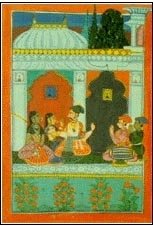
 Mewar paintings, originating from the Mewar region in Rajasthan, India, represent one of the most significant schools of Rajput painting. This artistic tradition began to flourish in the early 17th century and continued to evolve through the 19th century, characterised by its unique style and thematic diversity. Mewar paintings are celebrated for their vivid expression of religious devotion, cultural richness, and regal legacy.
Mewar paintings are known for their bold and intense colour palette, predominantly featuring deep blues, reds, and greens. These colours were used to create striking contrasts and to enhance the dramatic effect of the narratives portrayed. The compositions are typically busy, with elaborate backgrounds and multiple figures that fill the canvas, giving a sense of abundance and life.
Mewar painters were deeply influenced by the local culture and spirituality. Themes often revolved around devotion, courtly life, festivals, processions, and scenes from royal hunts. Krishna Leela scenes were particularly popular, capturing various episodes of Krishna’s life with a tender and intimate touch that appealed to the devout.